Let’s be honest. For most businesses, the word “returns” is about as welcome as a Monday morning system crash. It often brings to mind lost revenue, logistical headaches, and a general sense of disappointment. After the whirlwind of the holiday season, the inevitable wave of returned products can feel like a final, frustrating chore. But what if we looked at it differently? What if that tide of returned goods wasn’t an expense, but an opportunity?
The truth is, your reverse logistics process—the journey a product takes from the customer back to your business—is sitting on a goldmine of untapped potential. Handled correctly, it can become a powerful engine for profitability, customer loyalty, and sustainability. In 2026, we’re moving beyond just processing returns. We’re transforming them into a strategic advantage through recommerce. It’s time to stop thinking of returns as a cost center and start seeing them for what they are: a second chance at revenue.
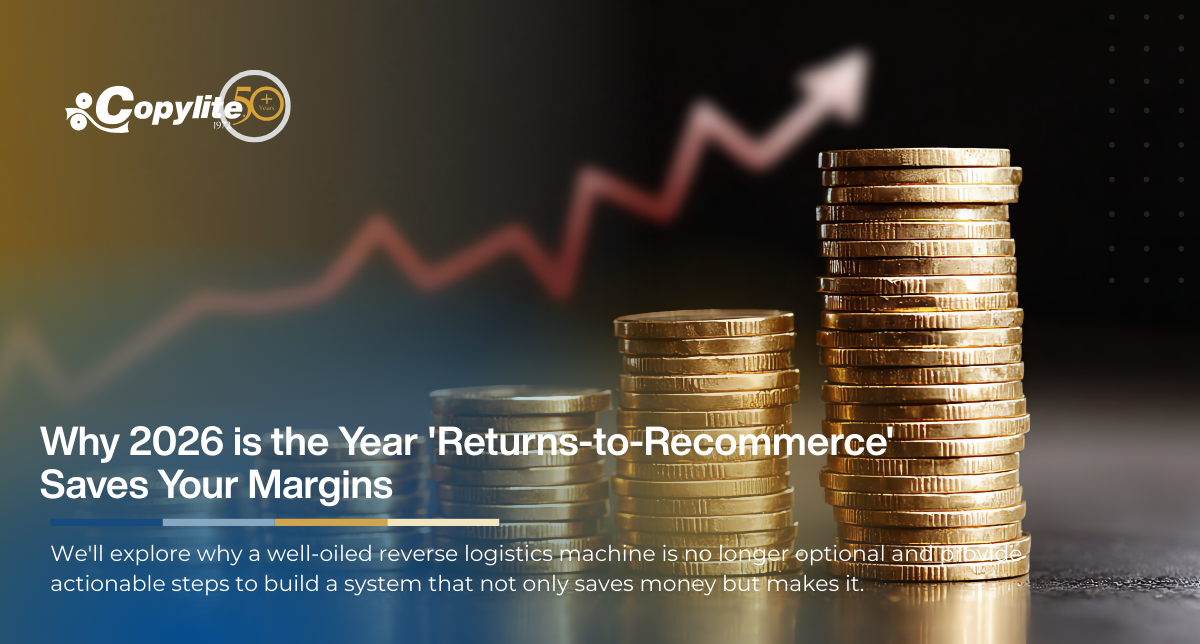
This guide will walk you through how to turn your returns process from a necessary evil into a genuine profit center. We’ll explore why a well-oiled reverse logistics machine is no longer optional and provide actionable steps to build a system that not only saves money but makes it.
The Hidden Costs of a Broken Returns Process
Before we dive into the solutions, let’s get real about the problem. A clunky, inefficient returns process quietly drains your resources in more ways than one. It’s not just the lost sale; it’s a series of cascading costs that can seriously impact your bottom line.
Think about the typical journey of a returned printer part. A customer initiates a return, you generate a label, and the item begins its trip back to your warehouse. Once it arrives, what happens? For many, it sits in a designated “returns pile,” waiting for someone to inspect it, decide its fate, and process the refund. Every day it sits is a day its value depreciates.
Here are the primary ways a poor returns strategy costs you:
- Direct Financial Loss: This includes the cost of shipping the item back, the labor required to process it, and the refunded purchase price. If the item can’t be resold, that’s a 100% loss on the product’s value.
- Depreciating Asset Value: A printer fuser unit or maintenance kit isn’t like a fine wine; it doesn’t get better with age. The longer a returned product sits on a shelf, the less it’s worth. New models may be released, or its condition may degrade, making it harder to sell even at a discount.
- Increased Labor and Warehouse Costs: Your team spends valuable time handling, inspecting, and restocking returned items. This is time they could be spending on fulfilling new orders. Furthermore, returned inventory takes up precious warehouse space that could be used for fast-moving, profitable products.
- Customer Dissatisfaction: A difficult or slow returns process is a major turn-off for customers. In a competitive market, a bad return experience can be the reason a business owner or IT manager decides to source their parts elsewhere next time. A simple, fast process, on the other hand, builds trust and encourages repeat business.
When you add it all up, the financial bleed from a reactive returns strategy is significant. The good news? It’s entirely fixable.
From Reverse Logistics to Recommerce: A Strategic Shift
The game-changer for modern businesses is the concept of recommerce. Recommerce is the practice of reselling previously owned products, including customer returns, through secondary channels. Instead of viewing a returned item as a problem to be solved, recommerce sees it as inventory to be monetized.
This shift in mindset is crucial. It moves your operation from a linear “make-sell-dispose” model to a circular one where products are given a second, or even third, life. For businesses dealing in printer parts and components, this is a massive opportunity. A perfectly good transfer belt returned because a customer ordered the wrong model isn’t trash; it’s a high-value asset waiting to be sold.
Implementing a recommerce strategy powered by efficient reverse logistics allows you to:
- Recapture Lost Revenue: Resell returned items on a secondary market, as “open-box” deals, or to bulk liquidators. Even selling at a slight discount is infinitely better than a total loss.
- Attract New Customers: Budget-conscious buyers, from small businesses to large enterprises looking to cut costs, are actively seeking high-quality, warrantied alternatives to new OEM parts. An “open-box” section on your website can be a powerful customer acquisition tool.
- Enhance Sustainability Credentials: In 2026, sustainability isn’t just a buzzword; it’s a business imperative. A robust recommerce program demonstrates your commitment to reducing waste and promoting a circular economy, a value proposition that resonates with modern corporate buyers.
Building Your Profit-Driven Returns Machine in 5 Steps
Ready to transform your returns process? It’s about building a system that is fast, smart, and geared toward value recovery. Here’s a step-by-step guide to get you there.
Step 1: Make the Return Process Effortless for the Customer
The first step in a great reverse logistics process actually starts with the customer experience. A simple, transparent, and quick return initiation is non-negotiable. If a purchasing manager has to jump through hoops just to send back a mismatched toner cartridge, they’ll remember that frustration the next time they need to place a bulk order.
Actionable Insights:
- Implement a Self-Service Portal: Your website should have an easy-to-find returns portal where customers can log in, select the order they want to return, state the reason, and print a shipping label instantly. This reduces friction for them and automates the initial data entry for you.
- Communicate Clearly and Proactively: From the moment a return is initiated, keep the customer in the loop. Send automated email or SMS notifications when the return is shipped, when it’s received at your warehouse, and when the refund or credit has been processed. Transparency builds trust.
- Offer Flexible Return Options: Consider offering store credit as an alternative to a cash refund, perhaps with a small bonus (e.g., a 105% credit value). This keeps the revenue within your ecosystem and encourages a future purchase.
Step 2: Automate and Standardize Warehouse Receiving
Once a returned item arrives at your facility, speed is the name of the game. The “returns pile” is your enemy. Every moment an item sits unprocessed, its potential value is ticking down.
Actionable Insights:
- Establish a Dedicated Returns Station: Set up a specific area in your warehouse designed for efficiently processing returns. Equip it with the necessary tools: scanners, computers, inspection lighting, and packing materials.
- Use Barcodes to Your Advantage: When a customer initiates a return, the system should generate a unique RMA (Return Merchandise Authorization) number tied to a barcode on the shipping label. When your team scans this barcode upon receipt, your system should instantly pull up all the order information: what the product is, who sent it back, and why.
- Integrate with Your WMS/ERP: This automation is key. A scan should automatically update the inventory status, notify the customer that the item has been received, and queue the product for the next step: inspection. This seamless integration, like the kind offered by ECI e-automate, eliminates manual data entry and drastically cuts down processing time.
Step 3: Triage and Grade Products for Maximum Value
Not all returns are created equal. An unopened box is very different from a part that was installed, found to be incompatible, and then repackaged. Your process needs a clear, fast way to sort items based on their condition and potential for resale. This is the triage phase.
Actionable Insights:
- Create Clear Grading Criteria: Develop a simple, standardized grading system. For example:
-
- Grade A (New/Open-Box): The product is in its original packaging, unopened or with the seal broken but otherwise untouched. It can be immediately restocked or sold as “open-box.”
- Grade B (Refurbishable): The product shows light signs of use or has minor cosmetic blemishes but is fully functional. It may need cleaning, testing, or repackaging by your U.S.-based R&D team before being sold as a refurbished item.
- Grade C (For Parts/Recycle): The product is damaged, non-functional, or obsolete. These items can be stripped for salvageable components or sent to a certified electronics recycler.
- Empower Your Team: Train your warehouse staff to quickly and accurately assess and grade products based on this system. Provide clear visual guides and checklists to ensure consistency. The goal is to make a decision on an item’s fate within minutes of it being unboxed.
Step 4: Open Multiple Channels for Recommerce
Once you’ve graded an item, you need a clear pathway to sell it. Relying on just one channel limits your ability to recover the maximum value. A multi-channel recommerce strategy ensures that every salvageable product finds a home.
Actionable Insights:
- Create an “Open-Box” or “Outlet” Section: Your own website is the most profitable place to sell Grade A returns. Market these as “Open-Box Deals” or create a “Copylite Outlet” section. Be transparent about the condition and pass some of the savings on to the customer. This is a fantastic way to attract cost-conscious buyers.
- Build a Refurbished Product Line: For Grade B items, leverage your quality assurance capabilities. Have your technical team inspect, test, and certify these products. Selling them as “Certified Refurbished” with a limited warranty provides a reliable, lower-cost option that many businesses are eager to purchase.
- Partner with Secondary Marketplaces: Platforms like eBay or dedicated B2B liquidators can be excellent channels for moving refurbished items or selling products in bulk. This helps you reach a different audience that may not be visiting your primary site.
- Leverage a Parts-Harvesting Program: For Grade C items, don’t just write them off. A non-functional fuser assembly might contain valuable gears, sensors, or rollers that can be used to repair other units. This internal parts-harvesting program can dramatically lower your own refurbishment costs.
Step 5: Analyze Your Returns Data to Prevent Future Returns
The final, and perhaps most powerful, step in building a profitable returns system is using the data it generates. Your returns are giving you a constant stream of feedback about your products, your listings, and your customers’ experience. Ignoring it is like ignoring free consulting.
Actionable Insights:
- Track Return Reasons: Your returns portal should require customers to select a reason for the return (e.g., “ordered wrong item,” “not compatible,” “damaged in shipping,” “no longer needed”).
- Identify Product Page Issues: Are you seeing a high number of returns for a specific maintenance kit due to incompatibility? This is a clear signal that your product page needs more information. Add clearer compatibility lists, high-resolution photos from multiple angles, or even a short video to help customers buy the right part the first time.
- Spot Quality Control Trends: If you suddenly see a spike in returns for a particular part citing a defect, you can quickly alert your quality assurance team and investigate the issue with the manufacturer. This proactive approach prevents a small problem from becoming a large, costly one.
- Improve Packaging and Logistics: A pattern of items arriving damaged points to an issue in your packing process or with your shipping carrier. Analyzing this data allows you to reinforce packaging for fragile items and hold your logistics partners accountable.
By closing the feedback loop, you not only improve your reverse logistics process but you also reduce the overall volume of returns, saving you significant money in the long run.
Your Reliable Partner in Building a Better Business
Turning returns into revenue isn’t a futuristic ideal; it’s a practical, achievable strategy for 2026. It requires a shift in mindset and an investment in smart processes and technology. By making returns easy for customers, automating your internal workflows, and creating dedicated channels for recommerce, you can transform a major cost center into a thriving profit engine.
At Copylite, we understand that efficiency and reliability are the cornerstones of a successful business. That’s why we’re not just a provider of high-quality OEM alternative parts; we’re a strategic partner dedicated to your success. With our vast product range, rapid 1-2 day delivery from our warehouses across the country, and a commitment to unmatched quality, we provide the foundation you need to build a more resilient and profitable operation.