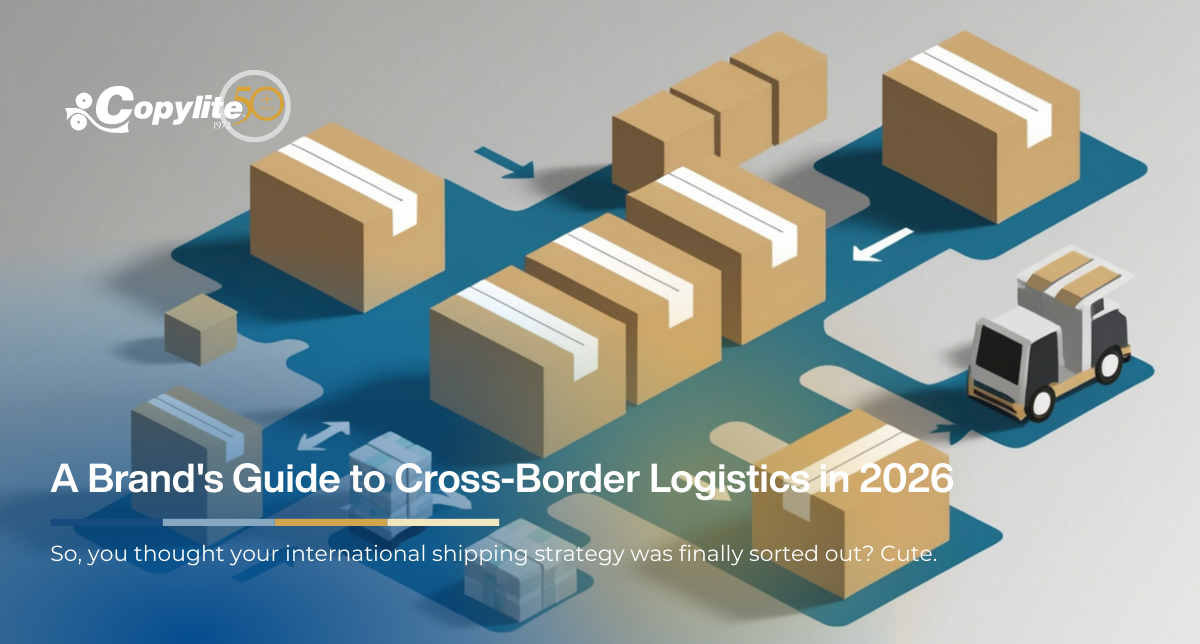
So, you thought your international shipping strategy was finally sorted out? Cute. It seems like just when we get comfortable, the world of global trade decides to throw another party, and we’re all invited—whether we’re ready or not. If terms like “supply chain volatility,” “port congestion,” and “geopolitical disruption” have you reaching for a strong cup of coffee (or something stronger), you’re not alone.
The old playbook of relying solely on long-distance ocean freight is looking a little… well, 2020. Today, smart businesses are looking closer to home. The “nearshoring” trend isn’t just a buzzword anymore; it’s a full-blown strategic movement. And right now, all eyes are on Mexico. The surge in trade moving south of the border is rewriting the rules of logistics.
Feeling a little overwhelmed by it all? Don’t sweat it. This guide is your friendly GPS for navigating the new world of cross-border logistics. We’ll break down why nearshoring is the talk of the town, how to tackle the challenges of Mexico-US trade, and how to turn global chaos into your competitive advantage.
Why “Closer” is the New “Cheaper” in Logistics
For decades, the global supply chain was a pretty straightforward story: find the cheapest place to manufacture goods, no matter how far away, and ship them across the world. This long-distance relationship worked, for a while. But recent years have exposed its vulnerabilities, leaving many businesses with empty shelves and frustrated customers.
Enter nearshoring. It’s the simple idea of moving your manufacturing and supply operations closer to your end customers. Instead of sourcing parts from halfway across the world, you partner with suppliers in a neighboring country. For American businesses, that means looking at Canada and, increasingly, Mexico.
So, why is everyone suddenly so interested in their neighbors?
- Reduced Transit Times: This one’s a no-brainer. A truck driving from Monterrey, Mexico, to Dallas, Texas, is infinitely faster than a container ship crossing the Pacific Ocean. Faster transit means you get your products quicker, can respond to market changes faster, and don’t have to tie up as much cash in inventory that’s floating on the water for weeks.
- Lower Supply Chain Risk: Remember all those port backlogs and container shortages? When your supply chain is shorter, there are simply fewer things that can go wrong. You reduce your exposure to international shipping crises, geopolitical flare-ups in distant regions, and other global disruptions.
- Increased Agility: The market moves fast. A shorter supply chain allows you to be more agile. You can place smaller, more frequent orders instead of massive bulk orders months in advance. This means you can pivot quickly if customer demand changes, without getting stuck with a warehouse full of the wrong product.
- Favorable Trade Agreements: The United States-Mexico-Canada Agreement (USMCA) simplifies trade between the three countries, reducing tariffs and streamlining customs for many goods. This makes trading within North America more predictable and cost-effective.
The long and short of it? The perceived cost savings of distant manufacturing are often wiped out by the hidden costs of delays, risks, and inflexibility. Nearshoring offers a more resilient, reliable, and ultimately more profitable alternative.
The Mexico Surge: What’s Driving the Boom?
While nearshoring is a continent-wide trend, Mexico is the undisputed star of the show. In 2023, Mexico officially became the United States’ top trading partner, a title held by China for over a decade. This isn’t a fluke; it’s the result of a perfect storm of factors making Mexico an incredibly attractive hub for manufacturing and logistics.
Let’s look at the key drivers:
- Investment in Infrastructure: Mexico has been pouring money into its industrial parks, highways, and border-crossing facilities. State-of-the-art manufacturing hubs are popping up, especially in northern states like Nuevo León and Baja California, specifically designed to support export-oriented industries.
- Skilled Labor Force: The country boasts a large and growing pool of skilled labor in manufacturing, engineering, and logistics. This isn’t just about lower labor costs; it’s about access to a talented workforce capable of producing high-quality goods.
- Geographic Sweet Spot: Mexico shares a nearly 2,000-mile border with the United States, the world’s largest consumer market. This proximity allows for seamless integration into North American supply chains via truck and rail, which are often faster and more reliable than ocean freight.
For businesses dealing in office equipment, printer parts, and other supplies, this is huge. Imagine being able to replenish your stock of toner or a critical fuser unit in a matter of days, not weeks. That’s the promise of the Mexico surge.
Your Playbook for Winning at Cross-Border Logistics
Okay, so you’re sold on the idea. Moving some of your sourcing or operations to Mexico sounds great. But how do you actually do it without getting tangled in a web of regulations and paperwork? It’s not as simple as just putting a new address in your GPS.
Navigating cross-border trade requires a smart strategy. Here’s a step-by-step playbook to get you started.
Step 1: Master the Paperwork (Or Find Someone Who Has)
Cross-border shipping is a world of acronyms and documents. From the Commercial Invoice to the Bill of Lading and USMCA Certificates of Origin, every piece of paper has a purpose. A single mistake can lead to your shipment being held up at the border for days or even weeks.
Actionable Insights:
- Create a Customs Checklist: Work with a logistics partner or customs broker to create a definitive checklist of all required documents for your specific products. Don’t leave it to guesswork.
- Automate Documentation: Use software or partner with a 3PL (Third-Party Logistics) provider that can automate the creation and submission of customs documents. This drastically reduces the risk of human error.
- Understand Product Classification: Every product has a specific Harmonized System (HS) code that determines the duties and taxes owed. Misclassifying your product is a common and costly mistake. Get this right from the start!
Step 2: Choose Your Transportation Mode Wisely
How you move your goods across the border is just as important as the goods themselves. You have two primary options for ground freight: truck and rail.
Trucking:
- Full Truckload (FTL): Best for large shipments that fill an entire truck. It’s the fastest and most direct option, as the truck goes from Point A to Point B with no stops.
- Less-Than-Truckload (LTL): Perfect for smaller, more frequent shipments that don’t require a full truck. Your goods share space with other shipments, making it a cost-effective choice. It can be slightly slower than FTL due to multiple stops.
Rail:
- Intermodal Rail: For longer-haul moves (e.g., from central Mexico to the northern U.S. or Canada), rail can be more cost-effective and fuel-efficient than trucking. The container is simply moved from a truck to the train and back to a truck for final delivery.
Actionable Insight: Don’t just default to one mode. A hybrid approach often works best. Use LTL for regular replenishment of your core inventory, FTL for large product launches, and intermodal rail for non-urgent bulk shipments to a secondary warehouse. A good logistics partner can help you model the costs and transit times for each.
Step 3: Build a Resilient “Safety Stock” Strategy
Even with a shorter supply chain, disruptions can happen. A customs backlog, a national holiday in Mexico, or a severe weather event can still cause delays. The key is to build a buffer into your inventory strategy.
Actionable Insights:
- Establish a U.S. Forwarding Warehouse: Instead of shipping directly from a Mexican factory to your end customer, ship to a strategically located warehouse in a U.S. border city like Laredo, El Paso, or San Diego. This facility can hold your “safety stock.”
- The “Pull” Method: Your U.S. warehouse becomes your primary fulfillment center. It holds a few weeks’ worth of inventory. As you “pull” from this stock to fulfill daily orders, you send replenishment signals back to your Mexican facility to send more products across the border.
- Benefits of this Model: This “hub-and-spoke” system gives you the best of both worlds. You get the cost benefits of Mexican manufacturing while maintaining the speed and reliability of having inventory ready to ship from within the U.S. It insulates your customers from any minor cross-border delays.
Step 4: Find a Partner Who Speaks Both Languages (Literally and Figuratively)
Navigating cross-border logistics is complex. You need a partner on the ground who understands the nuances of both U.S. and Mexican business cultures, regulations, and logistics networks.
Trying to manage it all yourself from afar is a recipe for disaster. A reliable 3PL partner can be your boots on the ground, handling everything from warehousing and customs brokerage to final-mile delivery.
What to Look for in a Cross-Border Partner:
- Bilingual Team: Communication is key. Ensure your partner has staff who are fluent in both English and Spanish.
- Facilities on Both Sides of the Border: A partner with warehouses in both Mexico and the U.S. can offer a truly seamless, end-to-end solution.
- Technology Integration: Their systems should be able to integrate with yours, providing real-time visibility into your inventory and shipments, no matter which side of the border they’re on.
- Expertise in Your Industry: A partner who understands the specific needs of printer and copier parts—like handling delicate components and managing thousands of SKUs—is invaluable.
Beyond Toners: Your Partner in a Brighter Business Future
The shift to nearshoring isn’t just a temporary trend; it’s a fundamental change in how global business operates. By embracing the opportunities in Mexico and building a smart, resilient cross-border logistics strategy, you can protect your business from global volatility and create a powerful competitive advantage.
It might seem daunting, but you don’t have to go it alone. At Copylite, we’ve spent over 50 years mastering the art of logistics. We’re more than just a supplier of high-quality parts; we are a solutions partner dedicated to helping your business thrive. Our deep understanding of complex supply chains and our commitment to service excellence make us the ideal partner to help you navigate your journey into cross-border logistics.
Ready to make your supply chain shorter, smarter, and stronger? Let’s talk.